It is important to understand when it is beneficial and when it is harmful to invite uninvolved individuals to join a conflict. If outside individuals are being utilized in order to form coalitions or conflict triangles, then this action will not lead to long-term solutions nor will it resolve the issues at hand. Conflict triangles, as defined by Joyce Hocker and William Wilmot in their textbook, Interpersonal Conflict, are coalitions that are created in response to people holding low-power positions within their conflict. While triangles are common and sometimes beneficial, they can also be harmful. The formation of coalitions ultimately create in-groups and out-groups. The formation of these groups can negatively impact the likelihood that issues will be resolved, as it turns individuals or groups against each other, rather than allowing them to focus on the issues that need addressed (Hocker & Wilmot, 2011, p. 229-234).
Involving outside individuals in conflicts can prove to be very helpful, however. Mediation is sometimes an important factor in conflict resolution. If two parties cannot truly communicate or resolve their issues on their own, skilled mediation is appropriate and necessary.
Using a skilled third party can help to create healthy conflict styles for individuals, recognize compatible goals between parties, create a power balance, expand the actual or perceived scarcity of resources, and so much more! We feel that the work done by the Center for Conflict Resolution (CCR) in Chicago, established in 1979, is a great example of a skilled third party. Let’s take a look at their mission statement from their website.
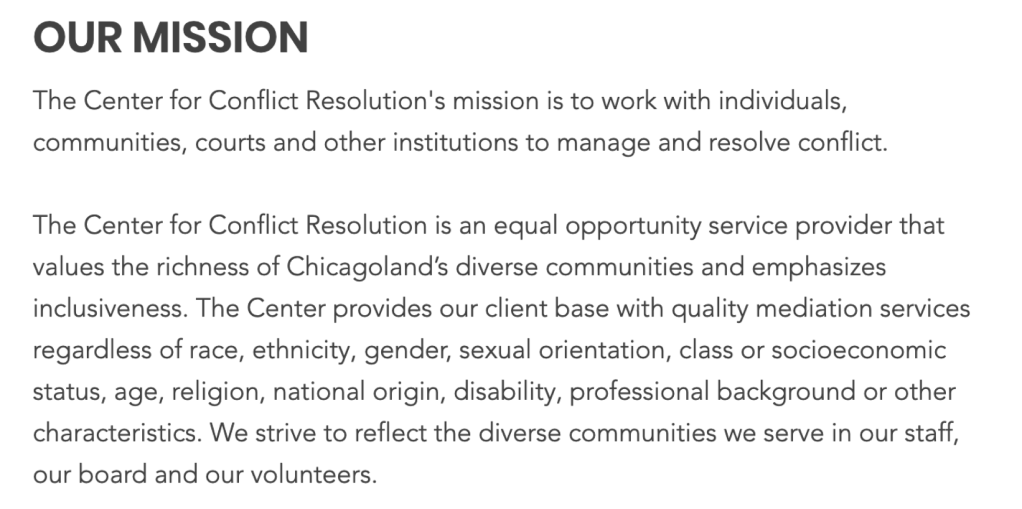
The Center for Conflict Resolution in Chicago does a remarkable job at recognizing the perceived power differences between individuals based on their age, race, income, education, disability, gender, etc. CCR works to balance these power differences, so that long-term resolutions can be found between diverse individuals or groups.
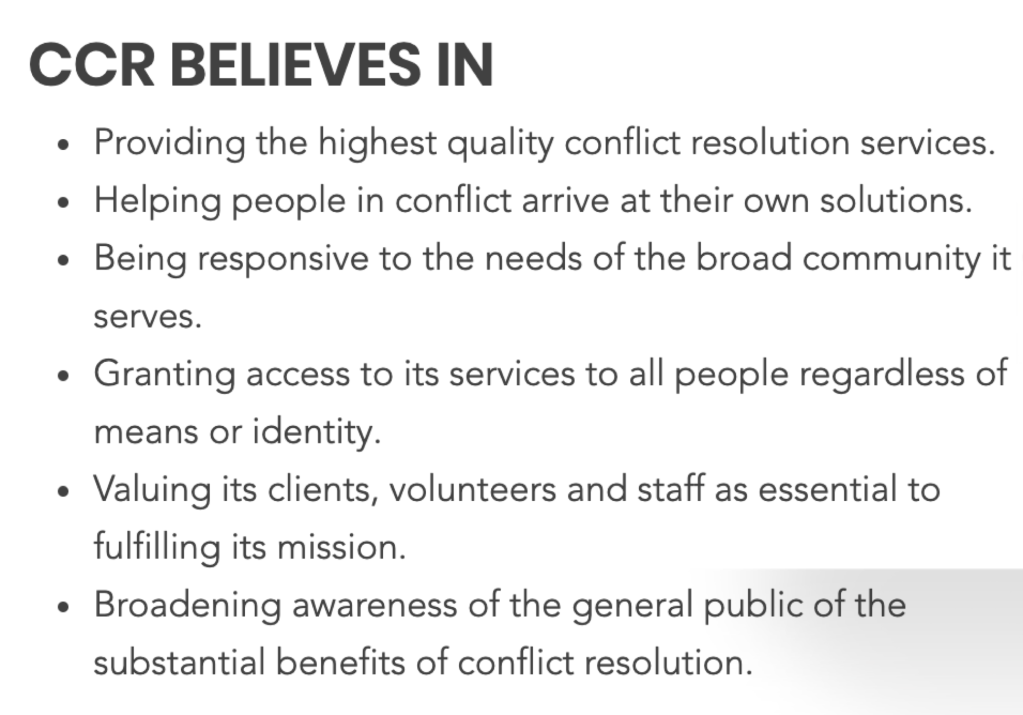
We also believe that the CCR is an effective resource for those in conflict, because they value the action of aiding others in arriving at their own solutions, rather than resolving their issues for them. They act as a middle party, rather than as a judge. This is important to recognize, because their work allows people in conflict to create long-term solutions for themselves and their own personal relationships. They can use the techniques and skills displayed by CCR employees to aid their conflicts in the future.
Furthermore, the CCR also values conflict resolution advocacy, as they reach out to other organizations within the Chicago community to offer conflict management workshops and other training programs. They offer multiple online and in-person courses for those who wish to truly learn the art of mediation or integration negotiation. They are a non-profit, private institution that is solely focused on giving aid to those in their community.
The CCR serves more than 5,000 clients each year and offers more than 20 mediation programs that handle evictions, foreclosure, and family disputes in the Chicago area. The CCR also trains more than 500 individuals each year in mediation, conflict management, and communication skills. After taking a look into the Center for Conflict Resolution’s blog that offers client testimonials on the aid they received from the CCR, it is clear that their work is impactful and long-lasting.
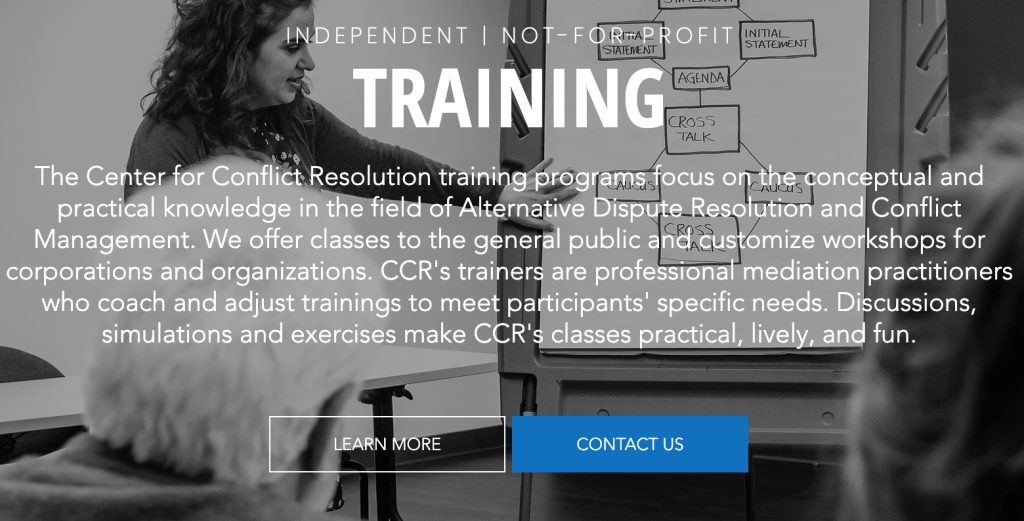
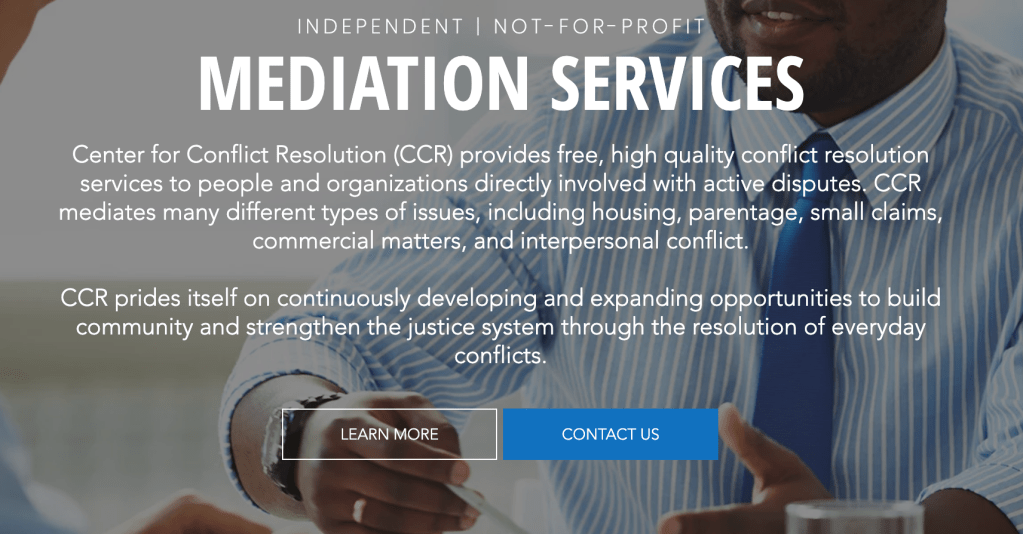
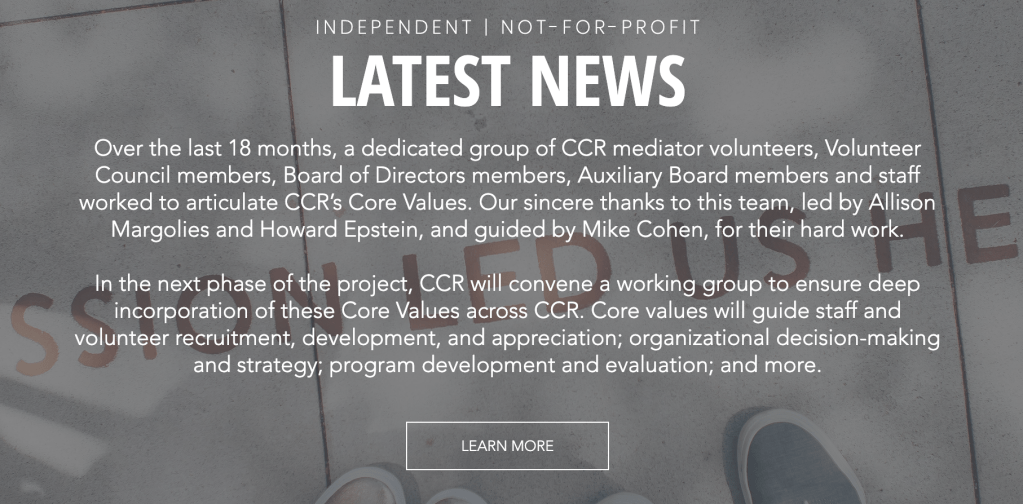
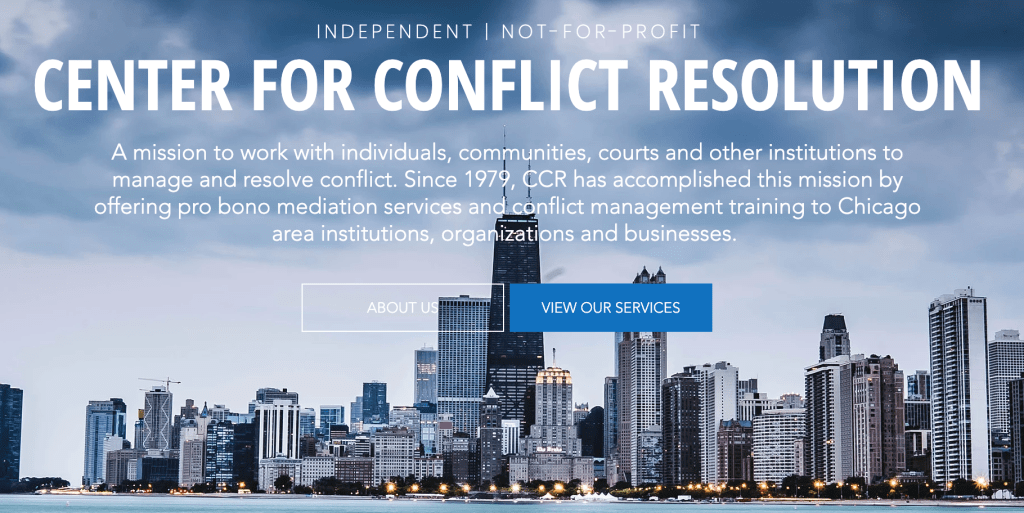
Their website is very easy to navigate and all of the center’s contact information is listed at the bottom of each webpage. The CCR’s participation in the Chicago community has been increasing over the years and it will be enlightening to see where the organization’s work will take them in the future.
References
Center for Conflict Resolution. (2019). About CCR.Center for Conflict Resolution. Retrieved from https://www.ccrchicago.org/
Hocker, J.L., & Wilmot, W.W. (2011). Interpersonal conflict. New York, NY: McGraw-Hill Education.
 Conflict Management